Topic Focus
Quantum computing made a little less mysterious.
In this space, we break down the fundamentals of quantum computing. We do so with clear, playful explanations. Dive into the learning roadmap below for a fun joyride into the world of quantum computing!
Overview
What quantum computing actually is!
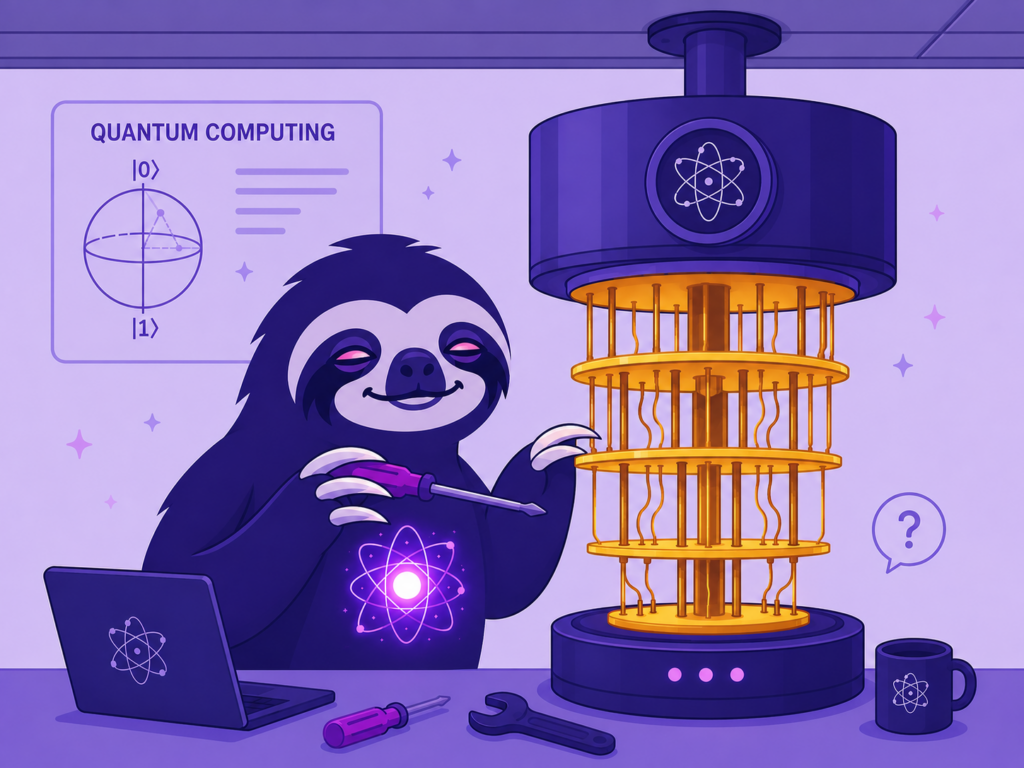
Quantum computing uses quantum bits, or qubits, that can represent more than a simple on-or-off state. This allows certain problems to be explored in ways that differ dramatically from classical machines. It is not a magical replacement for traditional computers. Instead, it is a specialized approach with exciting strengths in simulation, optimization, cryptography, and complex modeling. In other words, they are really good at solving complex problems that feel impossible to do efficiently using traditional computers.
Core Ideas
Learning Roadmap
If you are new to the field, these are concepts to make quantum computing simple and digestible. Follow this learning roadmap to learn about quantum computers in an easy-to-understand order.
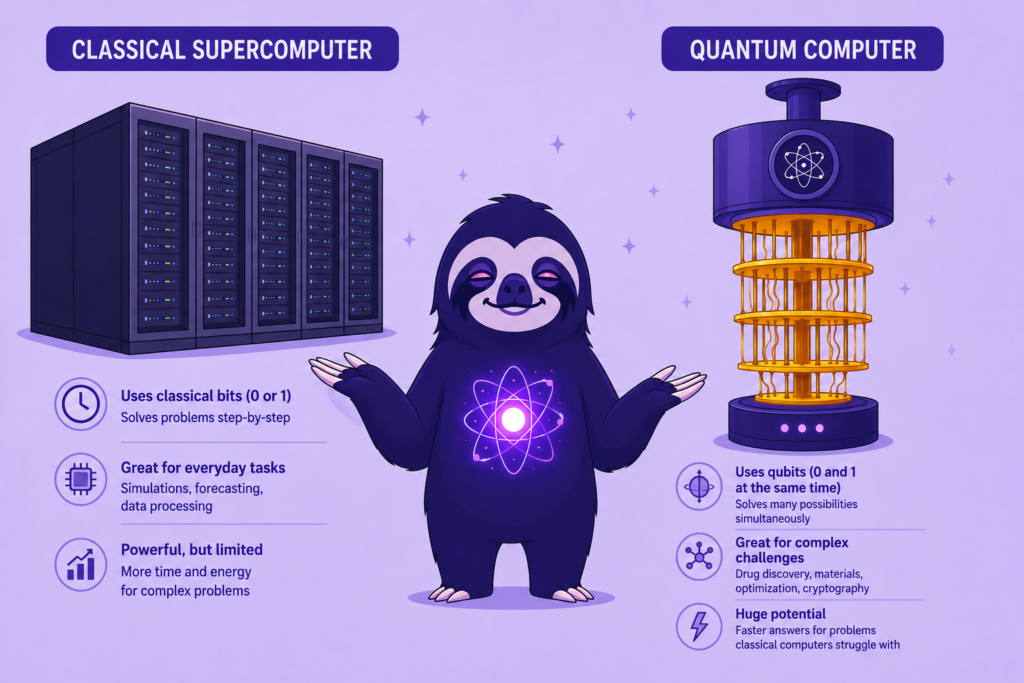
Classical Vs. Quantum Computing
Unlike classical computing, quantum computers operate on qubits, giving quantum systems their unusual computational behaviors. Classical computers do a great job of solving problems in linear, one-by-one computations. But for more complex, difficult & exponentially large problems, quantum computers are the way of the future due to their ability to compute problems with qubits and approach computations in parallel.
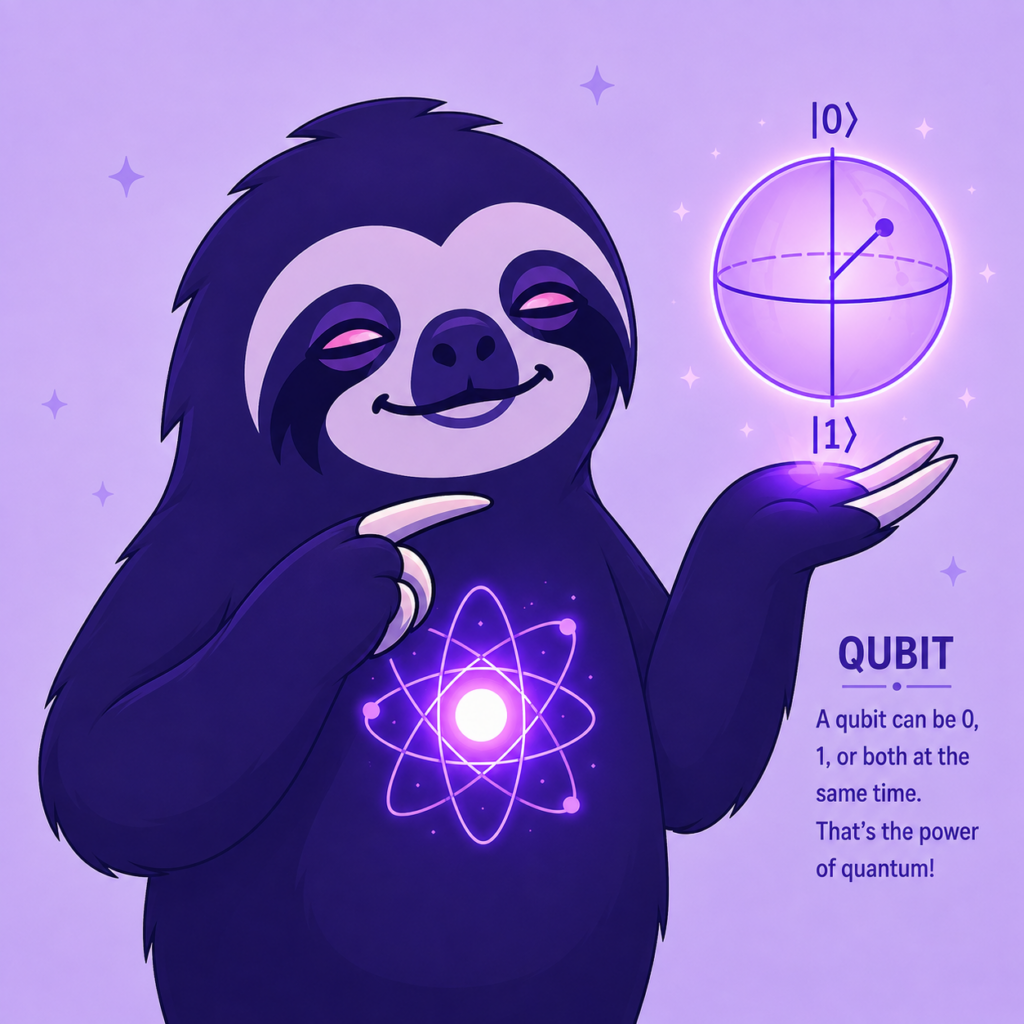
qubits
Qubits act as the basic unit of information within a quantum computer. Similar to how normal bits work in traditional computers. A regular bit is either 0 or 1; in qubits, they can be 0, 1, or a mix of both at the same time. Due to this foundational unit of information, quantum computers can explore multiple possibilities at once.
quantum entanglement
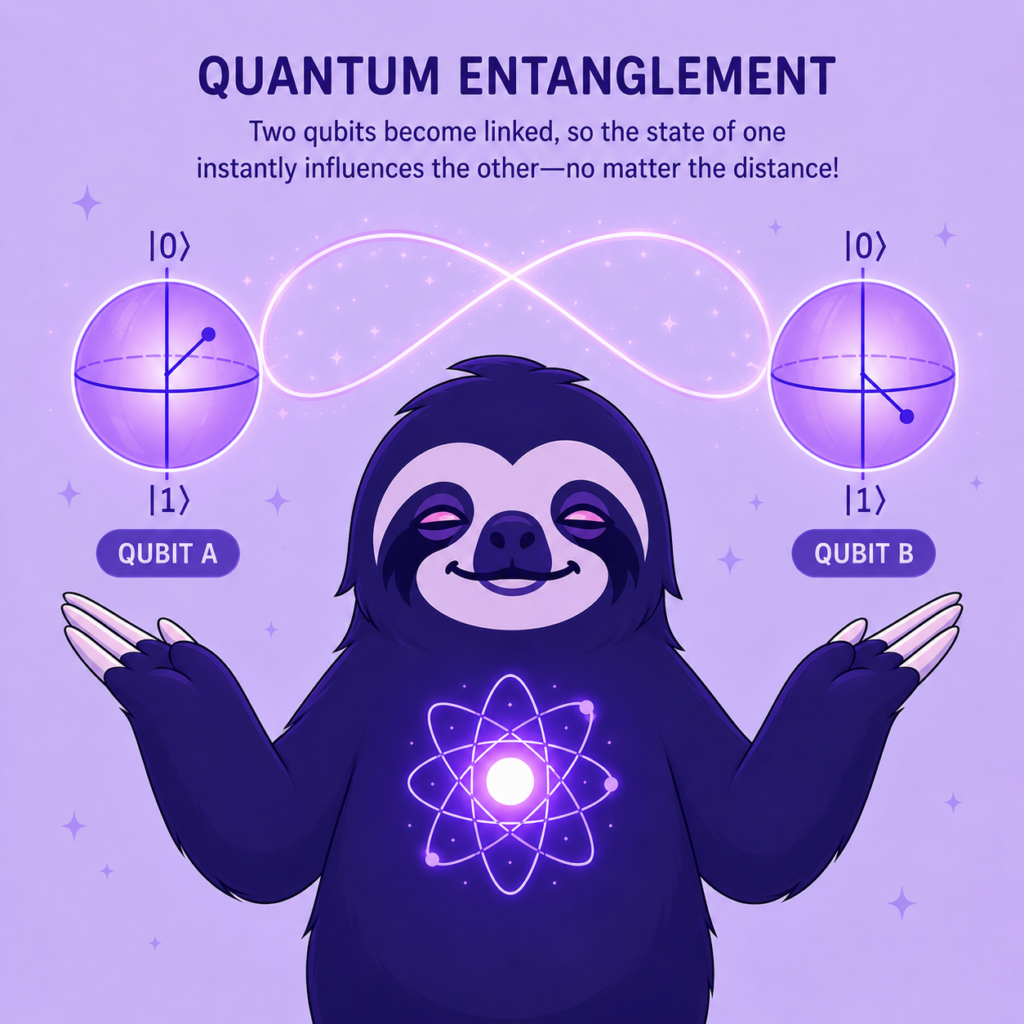
Quantum entanglement is when one qubit gets linked with another one! These two entangled qubits will provide insight on what the others’ states are; this happens instantly even if they are across the world from each other.
Cryogenics
Most quantum computers require an intense level of cooling to function. They need to be colder than even outer space, near absolute zero, to reduce noise and vibrations. This enables qubits to retain their state over time. This cooling allows them to retain quantum coherence and stability. Dive in deeper for more in-depth understanding of how quantum computers use cryogenics to cool their QPU’s.
Error Correction
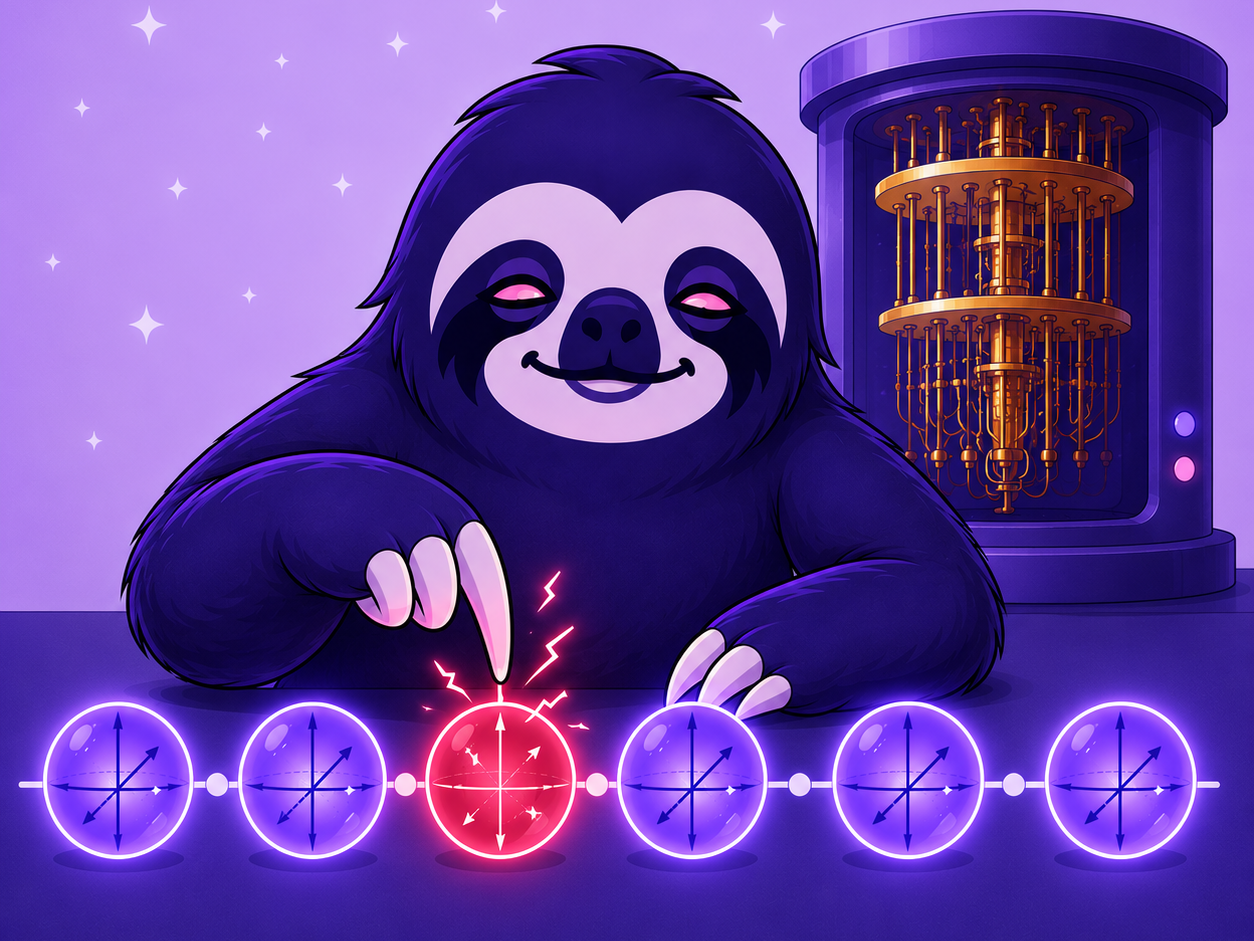
Quantum Error Correction, or QEC for short, allows quantum computers to protect from noise and decoherence. Qubit-based systems have a lot of noise, and navigating this with error correction is crucial to utilize multiple qubits at scale.